




training-and-behaviour
The right equipment makes training easier — but equipment alone doesn't train a dog. Here's how to use PAWD collars, harnesses, and leads effectively as part of a positive training approach.
## Choosing the Right Equipment for Training
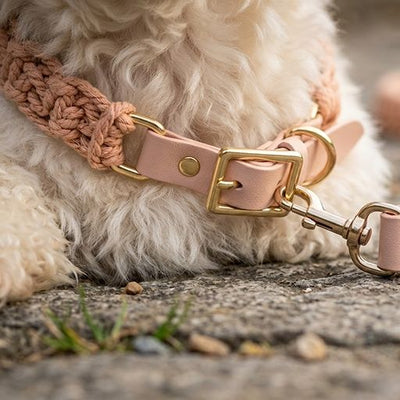
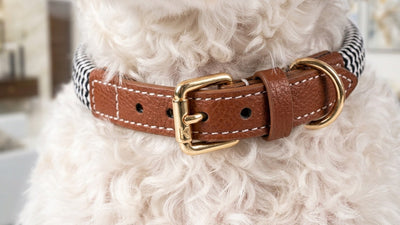
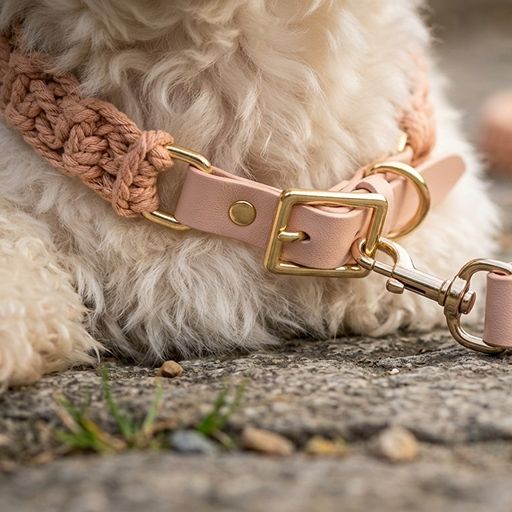
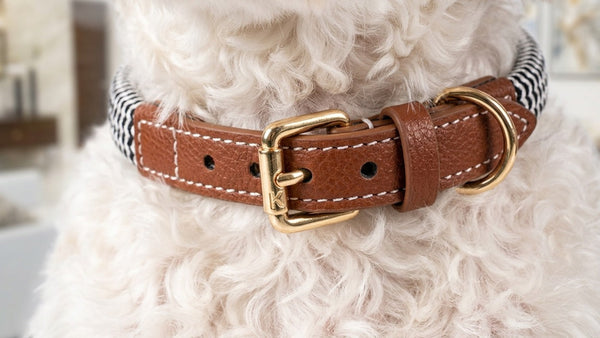
**Standard flat collar:** Best for dogs that walk well on lead and have a reliable recall. Not recommended for pullers — a flat collar puts all pressure on the trachea.
**Harness:** Distributes pressure across the chest and shoulders. Ideal for pullers, puppies, dogs with tracheal issues, and brachycephalic (flat-faced) breeds like French Bulldogs and Pugs. A front-clip harness gives you additional directional control.
**Martingale collar:** A limited-slip collar that tightens slightly under pressure but cannot overtighten. Ideal for Greyhounds, Whippets, and dogs that back out of standard collars.
**Long line (5–10m lead):** Essential for recall training. Allows your dog freedom to explore while you maintain control. Never use a retractable lead for recall training.
## Introducing a New Collar or Harness
Never just clip on a new collar and head straight outside. Introduce it gradually:
1. Let your dog sniff and investigate the collar before putting it on
2. Put it on for short periods indoors while doing something positive (feeding, play)
3. Gradually increase wear time over 3–5 days
4. Only then introduce it on walks
Some dogs, especially those who've never worn a harness, may freeze or walk strangely at first — this is normal and passes within a few sessions.
## Loose Lead Walking
The most common training challenge. The goal is simple: the lead should be slack at all times. The moment it goes tight, stop walking. Stand still. Wait for your dog to release the pressure, then reward and continue.
Consistency is everything. If you allow pulling even once, you're teaching your dog that pulling sometimes works.
**The technique:**
- Use a standard 1.2m or 1.8m flat lead — never a retractable
- Start in low-distraction environments (your backyard, a quiet street)
- Reward heavily for check-ins — when your dog looks back at you voluntarily, that's the behaviour you want
- Change direction frequently — this keeps your dog focused on you
## Recall Training
A solid recall is the most important behaviour your dog can have. Start in your lounge, then the backyard, then quiet parks — always building distance and distraction gradually.
Use a long line (5–10m) in open spaces until the recall is bombproof. Never use a long line attached to a collar — always attach to a harness to prevent neck injury if the dog hits the end of the line at speed.
The golden rule of recall: **never punish a dog that comes to you**, no matter how long it took. Coming to you must always be the best thing that ever happens to them.
## Puppies & New Dogs
Give new dogs and puppies time to decompress. A dog in a new home is processing enormous amounts of information. Limit training sessions to 5 minutes, multiple times a day. Short, positive, successful sessions build confidence faster than long, exhausting ones.
For professional guidance specific to your dog, we always recommend working with a qualified, force-free trainer.