Why Our Range Is Small
PAWD lists a few hundred products. We looked at several thousand to get there. This page is about why the range is the size it is, because the number of things a shop chooses not to sell tells you more than the number it does.
We reject most of what we see
Every product on this site was assessed individually. Not imported from a feed, not bulk-listed from a supplier catalogue. Someone looked at each one and made a call.
The things that get rejected are consistent:
- Hardware with a visible casting seam, or a D-ring attached with a single line of stitching.
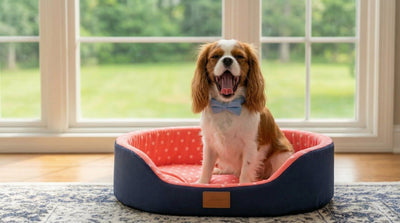
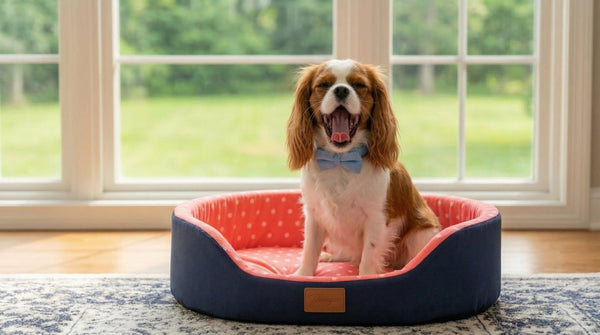
- Beds with covers that do not come off, which is the thing that decides whether a bed lasts a year or five.
- Anything where the photographs and the actual product specification disagree.
- Near-identical duplicates. If two items are the same product in a different box, one of them goes.
- Anything we could not describe accurately, because if we cannot say what it is made of we are not going to guess on a product page.
Why a smaller range is better for you
A pet shop with forty thousand SKUs has not evaluated forty thousand products. It has connected a feed. The work of deciding what is good has been handed to you, and you do it by reading reviews of products nobody at the shop has handled.
A tighter range means the filtering has already happened. It also means that when you search our collars by material or size, the results are a real set of options rather than fifty variations of the same thing.
What we are not claiming
We are not a workshop. We do not cut, stitch or finish anything ourselves, and the range is made by a manufacturing partner overseas rather than in small artisan batches.
So 'small batch' is not our claim. 'Small range, heavily filtered' is, and it is the honest version of the same idea: the value we add is judgement and accurate description, not manufacturing.
How the range grows
Slowly, and in response to gaps rather than trends. The current gaps we know about are breakaway cat collars, ceramic bowls, and a proper grooming range. Those are on the list because customers ask for them, not because they would round out a category page.
When something new appears here, it has been through the same assessment as everything else.
Common questions
Why do you not sell bowls or grooming products? Because we have not yet found ones we would use. The categories exist in the navigation so you can see the gap rather than wonder if we hid it.
Will you restock something that sells out? Usually, if it was good. Occasionally a product goes and does not come back because the replacement available to us was worse.
Do you sell the same products as other stores? Some of our range is available elsewhere, as is true of nearly every pet shop that is not a manufacturer. What differs is which items we chose, how accurately they are described, and whether the photographs show the actual product.
Enter neck size in cm
Measure around the base of your dog's neck and add 2cm for comfort