




materials-and-craft
<h2>Why an $80 Collar Is Worth Explaining</h2>
<p>It is a fair question. Dog collars exist at every price point, from a few dollars at a discount retailer to several hundred dollars from specialist makers. The difference is not always obvious on a product thumbnail. It becomes obvious about twelve months in, when one collar is still looking better than the day it arrived and the other has split, corroded, or stretched into something unrecognisable.</p>
<p>This guide explains what PAWD products are made from, why those materials were chosen over cheaper alternatives, and how to care for them so they last.</p>
<h2>Full-Grain Vegetable-Tanned Leather</h2>
<p>Leather is not a single material. The term covers everything from full-grain hide — the outermost, densest layer of the skin, with all its natural grain intact — to bonded leather, which is reconstituted leather scraps pressed together with adhesive and bears almost no resemblance to the original material.</p>
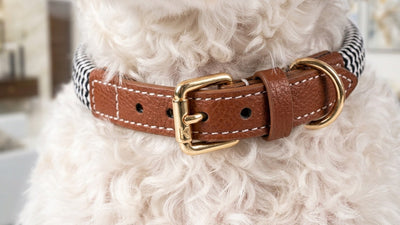
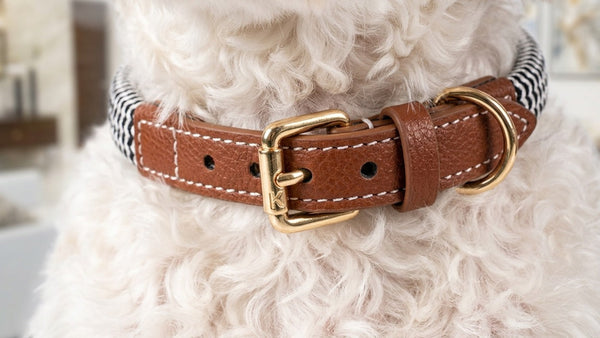
<p>PAWD uses full-grain leather. It is the most durable part of the hide and the only part that develops a patina over time — a deepening of colour and character that comes from contact with natural oils, light, and wear. A full-grain leather collar bought today will look distinctly better in two years than it does now. A chrome-tanned or split-leather collar bought at the same time will look worse.</p>
<p>Vegetable tanning is the traditional tanning method, using plant-derived tannins rather than chromium salts. It produces a firmer, denser leather that breaks in gradually rather than stretching immediately. It is also less likely to cause skin reactions in sensitive dogs, as it contains none of the chromium compounds associated with contact dermatitis in chrome-tanned leathers.</p>
<h2>Nylon Webbing</h2>
<p>Not all nylon is equal. The strength and longevity of a nylon collar or lead is determined largely by the denier of the weave — a measurement of fibre thickness — and by the quality of the dye. Low-denier nylon feels thin and frays quickly at the edges. It also bleeds colour in water, leaving stains on light-coloured coats.</p>
<p>High-denier nylon webbing is stiffer, heavier, and considerably more abrasion-resistant. It dries quickly, handles salt water and mud without degrading, and holds its colour wash after wash. For dogs who swim, work outdoors, or are simply harder on their gear, quality nylon outperforms leather on practical grounds and costs less to replace when it eventually wears out.</p>
<h2>Velvet and Fabric Collars</h2>
<p>Velvet and soft fabric collars are not a compromise — they are the right choice for specific dogs and situations. Puppies with developing skin benefit from the reduced friction of a soft collar during the period when they are wearing one for the first time. Post-surgical dogs, or those recovering from neck injuries, need a collar that makes no demands on sensitive tissue. Short-coated breeds with fine fur around the neck can experience coat breakage from stiffer materials.</p>
<p>The practical trade-off is durability. Fabric collars require more careful maintenance and will not last as long as leather or high-denier nylon under heavy daily use. They are not designed for dogs who swim regularly or spend long periods outdoors in wet conditions.</p>
<h2>Hardware: Why It Matters More Than You Might Think</h2>
<p>The weakest point of most collars is not the strap — it is the hardware. A D-ring that corrodes will stain your dog's coat. A buckle that is plated rather than solid will begin to flake within months of regular contact with water and salt. A clip that is cast from low-grade zinc alloy rather than forged stainless steel will eventually fail under sudden load — precisely the moment you need it not to.</p>
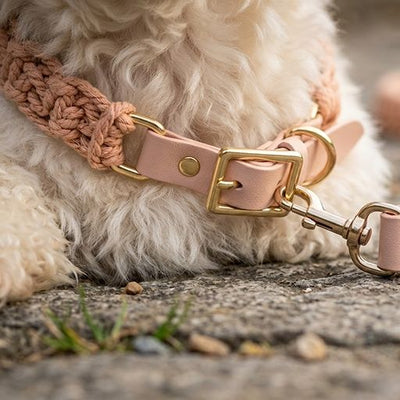
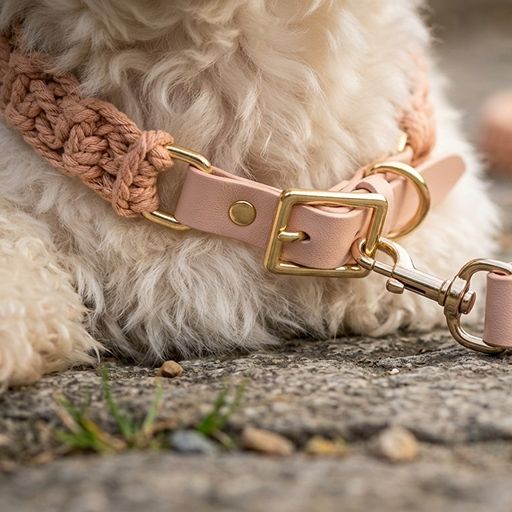
<p>PAWD uses stainless steel D-rings and buckles across its leather and nylon range. Stainless steel does not rust, does not plate, and does not tarnish. The rose gold finish used across some PAWD lines is PVD-coated — a physical vapour deposition process that bonds the finish at a molecular level rather than electroplating it over a base metal. The result is a finish that is genuinely durable, not merely cosmetic.</p>
<h2>Stitching and Construction</h2>
<p>The way a collar is assembled determines how long it holds together under load. A single line of straight stitching running the length of a collar will eventually work loose at stress points — particularly where the D-ring is attached and where the buckle bar sits. Box stitching — a rectangular stitch pattern with diagonal crosses — distributes load across multiple stitch lines simultaneously and is significantly more resistant to pull-through failure.</p>
<p>Thread quality matters too. Nylon thread is UV-resistant and does not absorb moisture, making it the appropriate choice for outdoor gear. Cotton thread, sometimes used in cheaper products, breaks down with repeated water exposure and UV light over time.</p>
<h2>How to Care for Leather</h2>
<ul>
<li><strong>Condition every few months</strong> with a natural beeswax or lanolin-based leather conditioner. This prevents the leather from drying out and cracking.</li>
<li><strong>Avoid prolonged soaking.</strong> A leather collar can get wet — dogs swim, it rains — but leaving it submerged or wet for extended periods will cause the leather to stiffen and eventually crack as it dries.</li>
<li><strong>Dry naturally.</strong> Keep wet leather away from direct heat sources. A radiator or hair dryer will dry it too quickly and cause cracking.</li>
<li><strong>Wipe clean with a slightly damp cloth</strong> rather than submerging the collar to clean it.</li>
</ul>
<h2>How to Care for Nylon</h2>
<ul>
<li><strong>Machine wash on a cold, gentle cycle</strong> in a mesh laundry bag to protect the hardware.</li>
<li><strong>Air dry completely</strong> before returning to use. Nylon dries quickly at room temperature.</li>
<li><strong>Do not use bleach or fabric softener.</strong> Both degrade the fibre over time.</li>
<li><strong>Check stitching and hardware periodically</strong> — particularly after heavy outdoor use — for any signs of fraying or wear.</li>
</ul>
<h2>How to Care for Velvet and Fabric</h2>
<ul>
<li><strong>Spot clean where possible</strong> using a damp cloth and mild soap.</li>
<li><strong>Machine wash on a gentle cycle</strong> in a mesh bag if a full wash is needed.</li>
<li><strong>Do not tumble dry.</strong> Lay flat or hang to air dry.</li>
<li><strong>Remove before swimming or prolonged outdoor activity</strong> to extend the life of the fabric.</li>
</ul>
<h2>Crafted to Specification</h2>
<p>The phrase "crafted to PAWD specification" appears across our product range and it means something specific. PAWD products are not designed and then manufactured to the lowest viable cost. They are specified — meaning the hardware gauge, the leather grade, the webbing denier, the stitch pattern, and the finish are all defined upfront and tested before production is confirmed.</p>
<p>That process costs more. It means longer lead times, smaller production runs, and occasional decisions to delay a product rather than compromise on a material that didn't perform as expected in testing. It is also the reason the products hold up the way they do.</p>
<h2>Buy Less, Buy Better</h2>
<p>A well-made collar, cared for properly, will outlast three or four cheaper alternatives bought over the same period. It will also look better throughout that time, perform more reliably, and create less waste. The economics of quality are not complicated — they just require the upfront decision to invest in something made to last rather than made to a price point.</p>
<p>That is the philosophy behind every PAWD product. Not luxury for its own sake, but quality that justifies itself over time.</p>