




Sizing and Fit
<h2>Why Fit Is Everything</h2>
<p>A collar that sits too loose can slip over a dog's head in a moment of panic. One that's too tight restricts breathing and causes skin irritation over time. The right fit sits snugly — two fingers between the collar and the neck, no more, no less. Getting this right before you buy saves your dog discomfort and saves you from returning a product you would have loved.</p>
<p>This guide walks through how to measure for every type of PAWD accessory: collars, harnesses, and leads. It takes about two minutes and makes all the difference.</p>
<h2>What You Need</h2>
<ul>
<li>A soft fabric tape measure (a strip of paper and a ruler also work)</li>
<li>Your dog or cat, ideally standing or sitting calmly</li>
<li>A notebook to write the measurement down before you forget it</li>
</ul>
<h2>Measuring for a Collar</h2>
<p>Wrap the tape measure around the middle of your dog's neck — not at the base near the shoulders, and not at the very top near the jaw. The middle of the neck is where the collar will actually sit during wear.</p>
<p>Take the measurement in centimetres, then add 2cm for comfort. This is your collar size. The two-finger rule is a good secondary check: once the collar is on, you should be able to slide two fingers underneath it with light resistance. If you can fit a full hand through, it's too loose. If you can barely get one finger in, it's too tight.</p>
<h3>Collar Size Chart</h3>
<table>
<thead>
<tr>
<th>Size</th>
<th>Neck Circumference</th>
<th>Typical Breeds</th>
</tr>
</thead>
<tbody>
<tr>
<td>XS</td>
<td>20 – 28cm</td>
<td>Chihuahua, Pomeranian, Yorkshire Terrier</td>
</tr>
<tr>
<td>S</td>
<td>28 – 36cm</td>
<td>French Bulldog, Shih Tzu, Cavalier King Charles</td>
</tr>
<tr>
<td>M</td>
<td>36 – 44cm</td>
<td>Cavoodle, Cocker Spaniel, Whippet</td>
</tr>
<tr>
<td>L</td>
<td>44 – 52cm</td>
<td>Labrador, Border Collie, Dalmatian</td>
</tr>
<tr>
<td>XL</td>
<td>52 – 60cm</td>
<td>German Shepherd, Rottweiler, Bernese Mountain Dog</td>
</tr>
</tbody>
</table>
<p>These are guidelines, not guarantees. Every dog is built differently — a stocky French Bulldog may measure into a Medium despite being a small breed. Always go by the measurement, not the breed.</p>
<h2>Measuring for a Harness</h2>
<p>Harnesses fit around the chest, not the neck, so the key measurement is girth — the widest point of your dog's ribcage, just behind the front legs. Wrap the tape measure around this point and note the circumference in centimetres.</p>
<p>Some harness styles also use the neck measurement for the upper loop. If the product page lists both, measure both before ordering.</p>
<h3>Harness Size Chart</h3>
<table>
<thead>
<tr>
<th>Size</th>
<th>Chest Girth</th>
<th>Typical Breeds</th>
</tr>
</thead>
<tbody>
<tr>
<td>XS</td>
<td>30 – 40cm</td>
<td>Chihuahua, Toy Poodle</td>
</tr>
<tr>
<td>S</td>
<td>40 – 54cm</td>
<td>French Bulldog, Miniature Dachshund</td>
</tr>
<tr>
<td>M</td>
<td>54 – 68cm</td>
<td>Cavoodle, Beagle, Cocker Spaniel</td>
</tr>
<tr>
<td>L</td>
<td>68 – 82cm</td>
<td>Labrador, Boxer, Siberian Husky</td>
</tr>
<tr>
<td>XL</td>
<td>82 – 100cm</td>
<td>German Shepherd, Golden Retriever, Rottweiler</td>
</tr>
</tbody>
</table>
<h2>What to Do If Your Dog Falls Between Sizes</h2>
<p>Most PAWD collars and harnesses include multiple adjustment points, so there is genuine flexibility within each size. If your dog measures at 36cm — right on the border between Small and Medium — go up to Medium. It's easier to tighten a piece of hardware than to force a collar closed.</p>
<p>If you're still unsure, reach out before ordering. A measurement and a breed name is usually enough information to make a confident recommendation.</p>
<h2>Measuring for a Lead</h2>
<p>Lead length is about use case, not the size of your dog.</p>
<ul>
<li><strong>120cm (Short lead):</strong> Urban walking, busy footpaths, training recall. Keeps your dog close in high-distraction environments.</li>
<li><strong>150–180cm (Standard lead):</strong> The everyday walk. Enough slack for your dog to move naturally without pulling ahead.</li>
<li><strong>200cm+ (Long lead):</strong> Park walks, hiking, training at a distance. Not recommended for city footpaths.</li>
</ul>
<h2>Sizing for Cats</h2>
<p>Cats have narrower, more delicate necks than dogs of equivalent body size, and they are considerably more sensitive to collar pressure. A cat collar should sit noticeably looser than a dog collar — you should be able to fit two to three fingers underneath comfortably. Most adult cats fall within the XS to Small range (22–32cm neck).</p>
<p>For cats, a breakaway safety buckle is strongly recommended regardless of fit, as cats are prone to getting collars caught on branches, furniture, and fences.</p>
<h2>PAWD Hardware and Adjustability</h2>
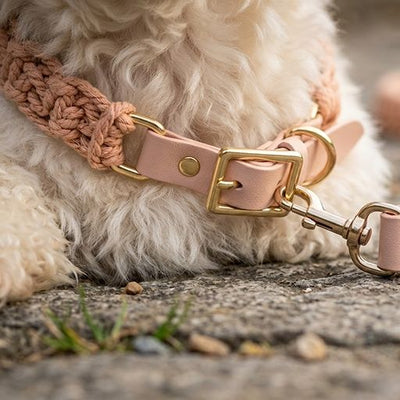
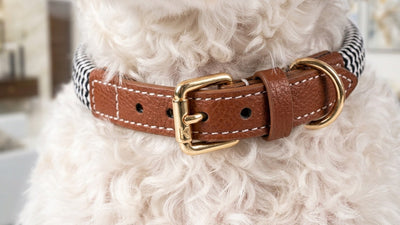
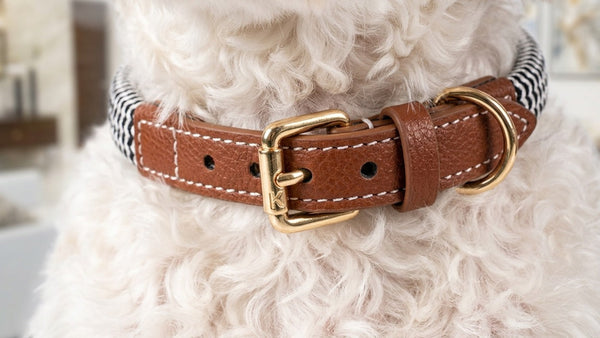
<p>Every PAWD collar and harness uses adjustable hardware — either a traditional buckle with multiple holes or a slide-lock adjuster — so the fit can be fine-tuned at home without tools. If your dog's weight fluctuates seasonally or you're buying for a growing puppy, factor in that adjustment range when choosing a size.</p>
<p>When in doubt, measure twice. The two minutes it takes will pay off every single walk.</p>