




Choosing a Harness for a Nervous or Reactive Dog
A nervous or reactive dog has different needs from a confident one. The wrong harness can make anxiety worse — or create a safety risk on a tense walk. Here's what to look for.
Avoid Anything That Restricts the Chest Dogs experiencing fear or stress naturally want to lower their body posture. A harness with a tight chest strap that restricts forward and downward movement adds physical tension to an already tense dog. Look for a Y-front or H-harness design that leaves the sternum and shoulders free.
Two Points of Contact A dual-clip harness — with both a front ring (chest) and back ring — gives you significantly more steering control without needing to apply sharp leash pressure. The front clip redirects the dog toward you when they lunge or bolt, rather than creating a backwards choking sensation from a collar.
Fit is Non-Negotiable for Escape Artists Reactive dogs that bolt or back up can slip a harness that's even slightly too loose. The chest piece should sit flat against the sternum, not floating above it, and you should only be able to fit one finger under the back panel — not two.
Desensitise the Harness Before your first walk, leave the harness near your dog's bed for a few days. Feed treats near it. Then put it on and take it off several times without going anywhere. Many nervous dogs develop anxiety around the harness because it only appears right before overstimulating walks — breaking that association helps.
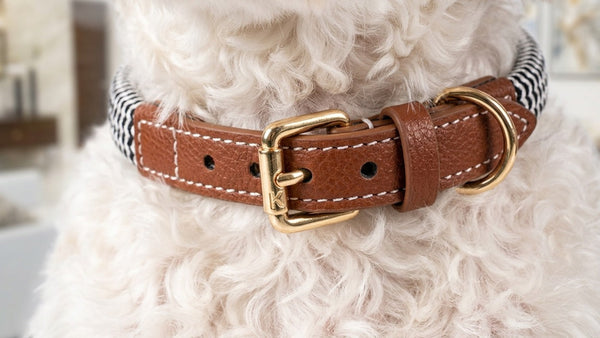
PAWD's Recommendation Our full-grain leather harness is designed with a wide, padded chest piece that distributes pressure evenly — meaning a sudden lunge doesn't create a sharp pressure point on the sternum. The dual-ring design supports front-clip walking for added control on reactive walks.